Critical Parameters of High-Performance Leaching Tank Design
Technical Opinion Article
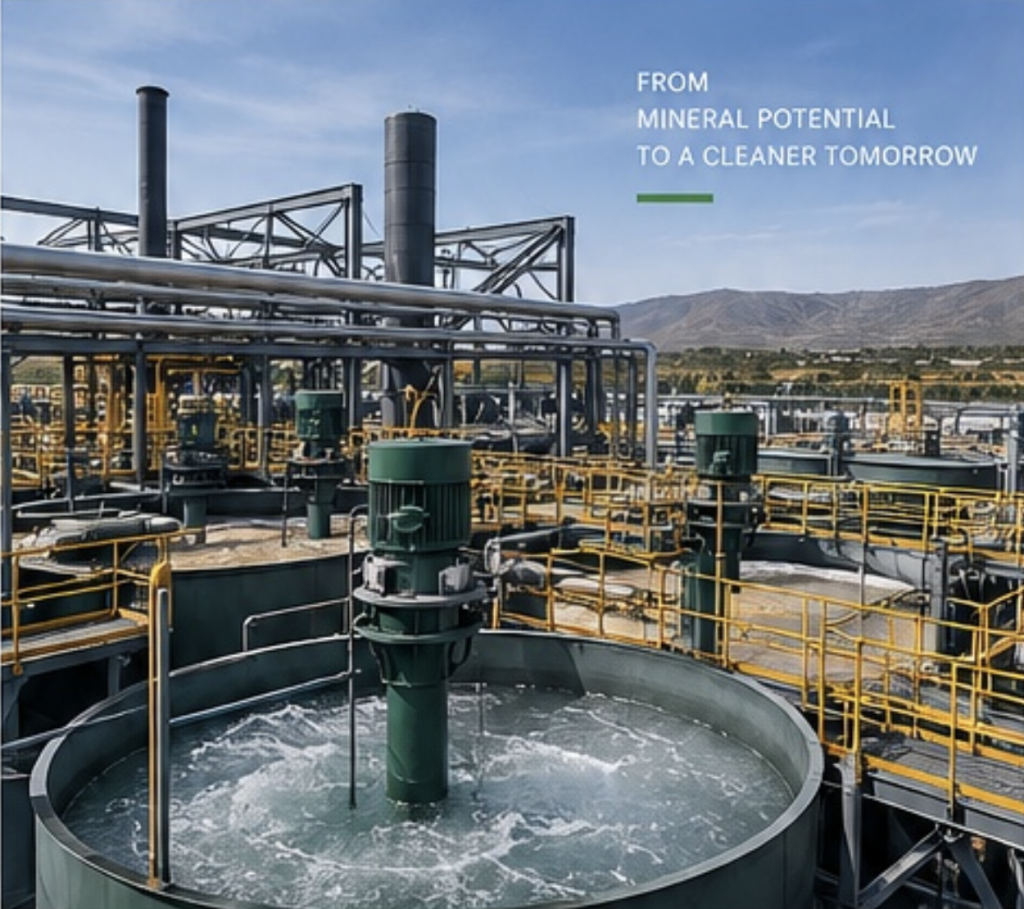
Industrial leaching tank environment illustrating the interaction between mixing, solids suspension and process conditions.
Introduction
Leaching tank design in hydrometallurgical processes is often approached as a question of tank volume and residence time. However, in industrial applications, a leaching tank should be viewed as a reactor in which solids and liquids interact under continuously changing hydrodynamic and chemical conditions. In our view, one of the key challenges in the industry is that parameters such as mixing, solids suspension, mass transfer, reaction kinetics and energy consumption are often considered separately rather than as an integrated system.
Mixing Hydrodynamics
One of the most important challenges is mixing hydrodynamics. Agitator selection directly affects flow patterns, solids suspension, mass transfer and power consumption. Parameters such as the Power Number (Np), Reynolds Number (Re) and Froude Number are commonly used to characterize mixing performance. However, slurry systems can behave very differently from water, particularly at high solids concentrations where viscosity and density can change significantly. As a result, designs based primarily on water-based laboratory testing may not accurately represent industrial operating conditions.
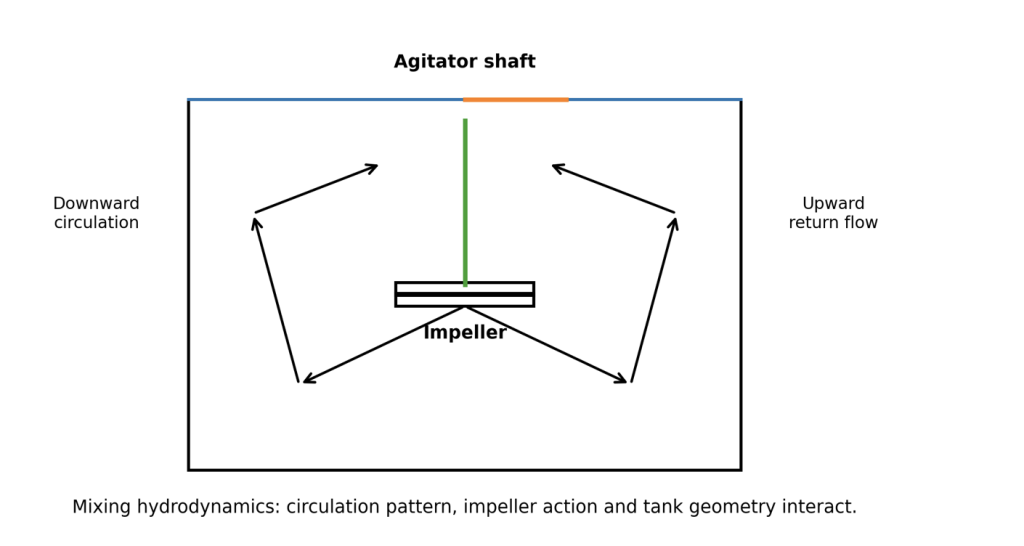
Figure 1. Conceptual mixing circulation inside an agitated leaching tank.
Solids Suspension
Solids suspension presents another important design challenge. Settling of ore particles can reduce the effective reaction volume and limit contact between the solid surface and the leaching solution. Determining the minimum impeller speed required for complete solids suspension, commonly referred to as the just-suspended impeller speed (Njs), is therefore essential. However, operating significantly above Njs is not necessarily beneficial. Excessive agitation can increase energy consumption and accelerate equipment wear, especially in abrasive slurry applications. The objective should therefore be to identify an operating range that provides adequate suspension without unnecessary power input.
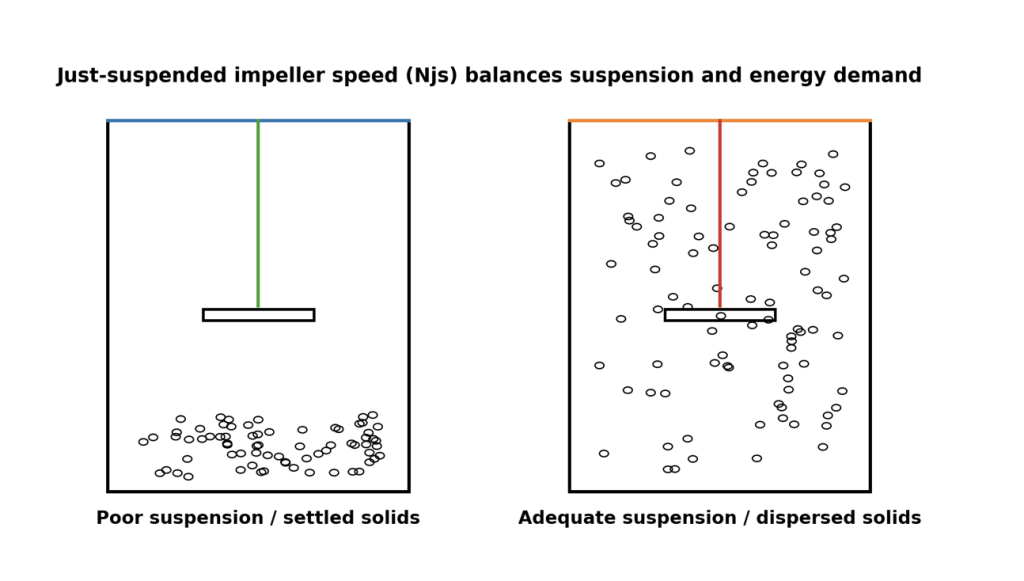
Figure 2. Conceptual comparison of settled solids and adequately suspended particles.
Scale-Up Considerations
This becomes particularly important during scale-up. Maintaining the same impeller speed from laboratory to industrial scale does not guarantee similar mixing performance. Changes in tank diameter, liquid height, impeller diameter and the number of impellers alter the internal flow structure. Depending on the process, power input per unit volume (P/V), impeller tip speed, impeller-to-tank diameter ratio and mixing time should therefore be evaluated together rather than relying on a single scale-up criterion.
Mass Transfer
Another frequently underestimated factor is solid-liquid mass transfer. Preventing particle settling is not sufficient to ensure effective leaching. The reagent must reach the particle surface, while dissolved metal must be transferred away from the solid-liquid interface. Poor circulation or local concentration gradients can limit the overall reaction rate even when the tank appears to be adequately mixed. This suggests that mixing systems should be designed not only for suspension, but also for effective mass transfer.
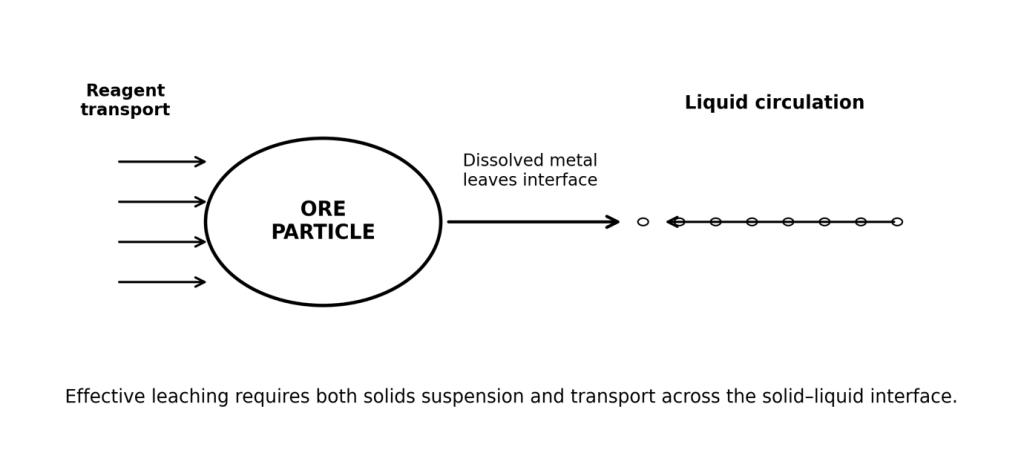
Figure 3. Conceptual solid–liquid mass-transfer path during leaching.
Particle Size and Reaction Kinetics
Particle size and reaction kinetics introduce another design trade-off. Finer particles generally provide greater surface area and can increase leaching rates. However, finer grinding also increases energy consumption, may alter slurry rheology and can create difficulties in downstream solid-liquid separation. Therefore, optimum particle size should be considered in relation to the complete process rather than being optimized solely for the leaching stage.
Residence Time Distribution (RTD)
The actual flow behavior of the tank is also critical. Residence Time Distribution (RTD) provides a more realistic perspective than nominal residence time alone. Dead zones and short-circuiting can cause some material to experience insufficient reaction time, meaning that two tanks with identical nominal residence times may achieve different dissolution efficiencies. Computational Fluid Dynamics (CFD), tracer studies and plant data can provide valuable insight into these non-ideal flow characteristics and help connect theoretical design assumptions with actual plant performance.
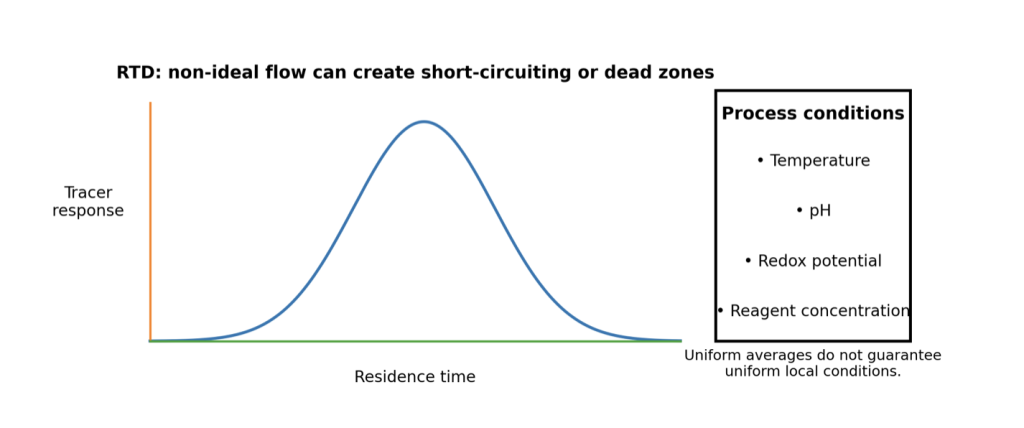
Figure 4. Conceptual RTD response and key process-condition variables.
Process Conditions
Finally, temperature, pH, redox potential and reagent concentration should be considered not only as process control variables but also as reactor design parameters. In large tanks, achieving the desired average value does not necessarily mean that conditions are uniform throughout the reactor. Local variations can influence reaction rates and ultimately affect overall recovery.
Conclusion
The key point is that there is no single parameter that defines a high-performance leaching tank. Mixing, solids suspension, mass transfer, reaction kinetics, RTD and energy consumption are strongly interconnected. A more effective design philosophy should therefore move away from optimizing individual parameters and toward evaluating the tank as an integrated reactor system. This integrated approach is also reflected in the work of Proses Makina, a global manufacturer of hydrometallurgical and recycling systems supplying integrated equipment solutions to customers worldwide.
The future of high-performance leaching tank design is likely to depend on combining experimental testing, CFD analysis and real-time process data. The objective should not simply be maximum agitation or maximum dissolution, but a balanced reactor design that provides sufficient reaction performance, stable solids suspension and effective mass transfer while minimizing energy consumption and operating costs.
Written by Afşin Turan Durmaz
Proses Makina
Technical Opinion Article